




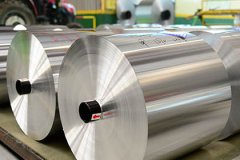
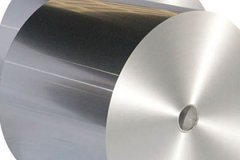
Aluminum sheet, coil and foil of Haomei Al. are widely used in automotive, transportation, printing, construction, packa...more >>

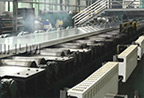

Haomei Al. is a large-scale listed company of aluminum sheet, aluminum coil and aluminum foil manufacturing, and the ann...more >>
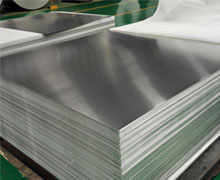
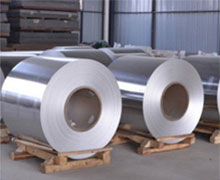
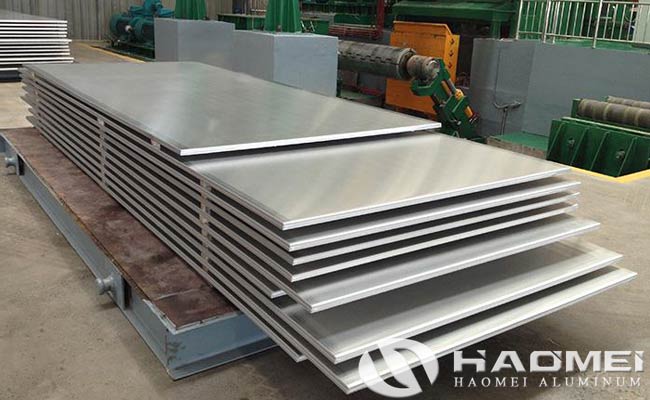
In industrial manufacturing and engineering applications, the core of aluminum sheet selection lies in matching material properties with actual working conditions. The most common aluminum sheet metal in the market are not the entire range of grades, but rather four main categories: 1000 series pure aluminum, 3000 series aluminum-manganese alloys, 5000 series aluminum-magnesium alloys and 6000 series aluminum-magnesium-silicon alloy. These four types of aluminum sheet, with their balanced performance, mature production processes, and wide adaptability, account for over 80% of the market share in common applications.
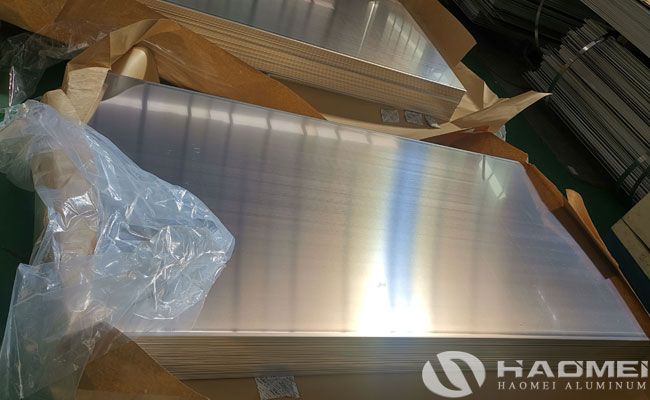
1000 Series Aluminum Sheets:
1000 series aluminum sheets are typical representatives of industrial pure aluminum. Among them, grades 1050 and 1060 are the most widely used. According to standard, their aluminum content is not less than 99.5% and 99.6% respectively, with impurities mainly being Fe and Si, strictly controlled below 0.4%. High purity endows it with excellent electrical and thermal conductivity. 1060 aluminum sheet has an electrical conductivity up to 60% of pure copper and a thermal conductivity of 236 W/(m·K). It also possesses excellent ductility, with an elongation exceeding 35%, allowing for complex forming processes such as deep drawing and spinning. Although its tensile strength is only 110-130 MPa, making it unsuitable for heavy loads, it is indispensable in applications where high strength requirements are not critical, such as electronic conductors, lighting reflectors, and corrosion-resistant chemical containers. Furthermore, its simple manufacturing process results in a significant cost-performance advantage.
3000 Series Aluminum Sheets:
3000 series aluminum sheets use manganese as the core alloying element, with representative grades 3003 and 3004. The manganese content is controlled at 1.0%-1.5%, making it a typical rust-resistant aluminum alloy. Compared to the 1-series, its tensile strength is increased to 180 MPa (cold-worked state), and its corrosion resistance, especially atmospheric corrosion resistance, is superior, while retaining good weldability and formability. Actual test data shows that after 1000 hours in a humid environment, the surface corrosion area of 3003 aluminum sheet is less than 0.5%, making it widely used in air conditioner evaporators, refrigerator liners, kitchenware, and architectural decorative panels. It is worth noting that this series lacks aging strengthening capabilities; strength improvement relies on cold working. Therefore, the selection should be based on the processing technology to determine the desired condition.
5000 Series Aluminum Sheets:
5000 series aluminum sheets use magnesium as the main alloying element. 5052 and 5083 are commonly used grades, with magnesium content ranging from 2.2% to 5.0%. They are a preferred material balancing strength and corrosion resistance. 5052 aluminum sheet has a tensile strength of up to 230 MPa and an elongation of 25%. The addition of 0.15% to 0.35% Cr further enhances its corrosion resistance, making it particularly suitable for harsh environments such as seawater. It is a core material for ship sheet metal and automotive fuel tanks. The 5083 grade, due to its higher magnesium content, can reach a strength of 380 MPa and can be used in heavy-duty applications such as pressure vessels and offshore platforms. This series of aluminum sheets is produced using continuous casting and rolling processes, enabling deep anodizing processing. Demand remains stable in the high-end decorative and structural component sectors.
6000 Series Aluminum Sheets:
6-series aluminum-magnesium-silicon alloy sheets, with 6061 aluminum sheet being a prime example, are aluminum sheets with exceptionally high comprehensive performance. They possess excellent processing, welding, and corrosion resistance, and are widely used in aerospace, mold manufacturing, and other fields. In the aerospace industry, 6061 aluminum sheet is used to manufacture aircraft structural components; its high strength and lightweight characteristics meet the stringent material performance requirements of aircraft. In mold manufacturing, 6061 aluminum sheet, after heat treatment, achieves high hardness and wear resistance, extending mold life.
The core logic for aluminum sheet metal selection should be grasped: choose 1000 series for high electrical and thermal conductivity and formability requirements; choose 3000 series for humid environments and medium strength requirements; and choose 5000 series for scenarios requiring both load-bearing capacity and corrosion resistance. As a company deeply involved in aluminum sheet manufacturing and export, we can provide customized grade and performance matching solutions based on specific working conditions to ensure accurate and efficient material selection.
live:onlinehcx



 Haomei Aluminum
 live:onlinehcx
 +8637165621391