




Aluminum sheet, coil and foil of Haomei Al. are widely used in automotive, transportation, printing, construction, packa...more >>


Haomei Al. is a large-scale listed company of aluminum sheet, aluminum coil and aluminum foil manufacturing, and the ann...more >>
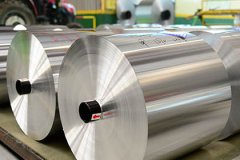
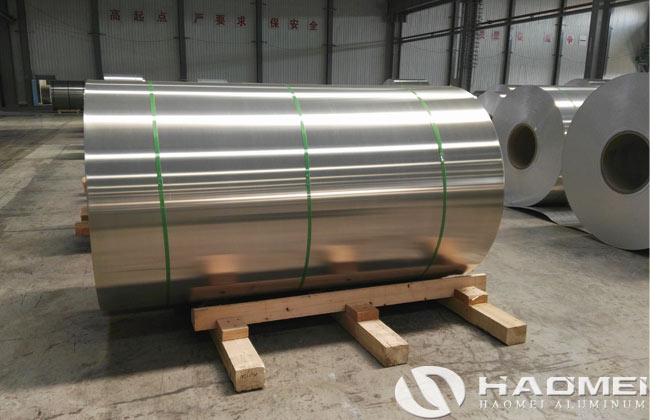
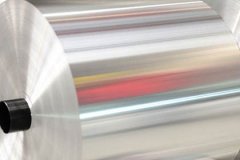
Refrigerant piping is the core distribution medium in industrial refrigeration, cold chain storage, and central air conditioning systems. It constantly bears the refrigerant under extreme temperatures and pressure variations, making it prone to common industry problems such as frost and condensation, moisture and ice blockage in the insulation layer, and vibration and wear. Ordinary aluminum cladding materials are insufficient for these demanding conditions. As a professional aluminum product exporter, Haomei Aluminum has developed refrigerant pipe aluminum cladding coils specifically designed for the refrigeration industry. With cryogenic dimensional stability, high vapor barrier properties, and vibration and wear resistance as core design principles, refrigerant pipe aluminum cladding are fully compatible with the protection needs of various refrigerants such as Freon, ammonia, and carbon dioxide. The products meet international industrial material standards and are exported to refrigeration projects in dozens of countries worldwide.
Haomei's refrigerant pipe aluminum cladding coils primarily feature two grades: 1060 high-purity aluminum and 3003 aluminum-manganese rust-resistant alloy, both of which have passed specific low-temperature condition verification.
The 1060 series aluminum has a purity of ≥99.6%, supplied in H14/H18 condition. It maintains excellent toughness even in cryogenic environments down to -40℃, with no risk of low-temperature brittleness or hardening. Its tensile strength is stable at 85–110 MPa, with standard thicknesses ranging from 0.2–1.0 mm. 0.3 mm and 0.5 mm are engineering-grade specifications, offering excellent cost-effectiveness and suitability for most medium-temperature refrigerant pipelines.
The 3003 alloy series, refined with manganese, boasts over 20% higher structural strength than 1060, significantly improved resistance to salt spray and acid/alkali corrosion, making it suitable for refrigeration station pipelines in coastal plants and chemically corrosive environments. The thickness tolerance of all products is controlled within ±0.02 mm, conforming to ASTM B209 international standards.
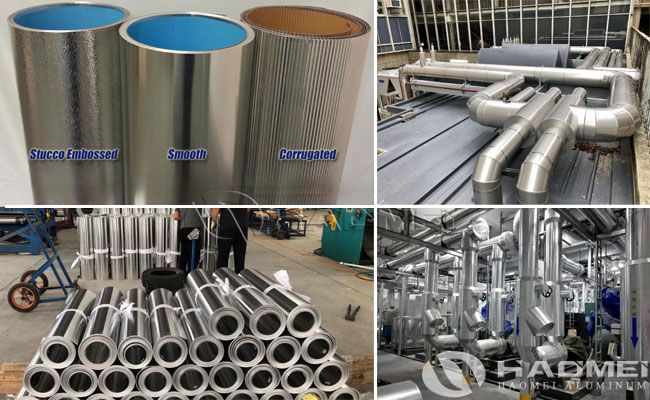
Based on different refrigerant pipeline installation environments and protection levels, refrigerant pipe aluminum cladding form three mature categories.
Smooth, plain aluminum cladding coils have a dense, flat surface, resulting in excellent seam sealing after coating. This minimizes cold air penetration and facilitates routine leak detection and maintenance. They are primarily used for refrigerant branch pipes in indoor refrigeration rooms and cleanrooms.
Orange peel stucco embossed aluminum cladding coils, through roll forming, enhance the rigidity and deformation resistance of the sheet material. This effectively buffers pipe vibrations caused by compressor start-up and shutdown, preventing wear and cracking of the aluminum sheet due to long-term resonance. They are suitable for outdoor overhead, long-distance refrigeration main pipelines.
Laminate moisture barrier lay aluminum cladding coils are coated with waterproof kraft paper or polysurlyn film, forming a double vapor barrier. This completely prevents environmental moisture from penetrating the insulation layer, eliminating problems such as frost formation in cryogenic pipelines and ice blockage in the insulation layer. They are the standard product for low-temperature cold storage and cryogenic process pipelines.
Addressing the core maintenance challenges of refrigerant pipelines, refrigerant pipe aluminum cladding achieve multi-dimensional performance optimization.
First, it offers cryogenic dimensional stability. The sheet material undergoes low-temperature tempering, ensuring its linear expansion coefficient perfectly matches that of rubber-plastic and polyurethane insulation layers, preventing blistering and delamination under alternating temperature variations.
Second, it provides fully sealed protection. The aluminum layer is non-porous, preventing oxygen and moisture from contacting the pipe body and reducing the risk of corrosion and refrigerant leakage.
Third, it features a lightweight structure. With an aluminum density of only 2.71 g/cm³, it significantly reduces the load on pipe supports, making it suitable for complex installation methods such as suspended ceilings and overhead installations.
Fourth, it is inherently safe. Aluminum is a non-combustible material, fully complying with fire safety regulations for refrigeration rooms.
Haomei refrigerant pipe insulation aluminum cladding offer excellent cutting and bending performance, adaptable to various pipe diameters and irregularly shaped fittings, effectively shortening on-site installation time. The coated version resists scratches, impacts, and contamination from sea transport, ensuring delivery quality. The product has a service life of over 15 years, requiring no painting or frequent maintenance, significantly reducing the long-term operation and maintenance costs of the refrigeration system.
As a source manufacturer, Haomei Aluminum supports customized widths, roll weights, and alloy conditions, and provides comprehensive export logistics and quality inspection services. Haomei aluminum cladding is compatible with refrigeration engineering standards in various regions around the world, providing stable and reliable pipe insulation solutions for customers in the cold chain, chemical, and commercial HVAC fields.
live:onlinehcx


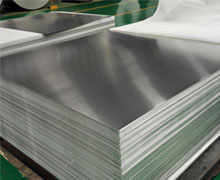
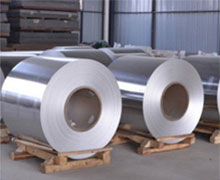

 Haomei Aluminum
 live:onlinehcx
 +8637165621391