



Aluminum sheet, coil and foil of Haomei Al. are widely used in automotive, transportation, printing, construction, packa...more >>


Haomei Al. is a large-scale listed company of aluminum sheet, aluminum coil and aluminum foil manufacturing, and the ann...more >>
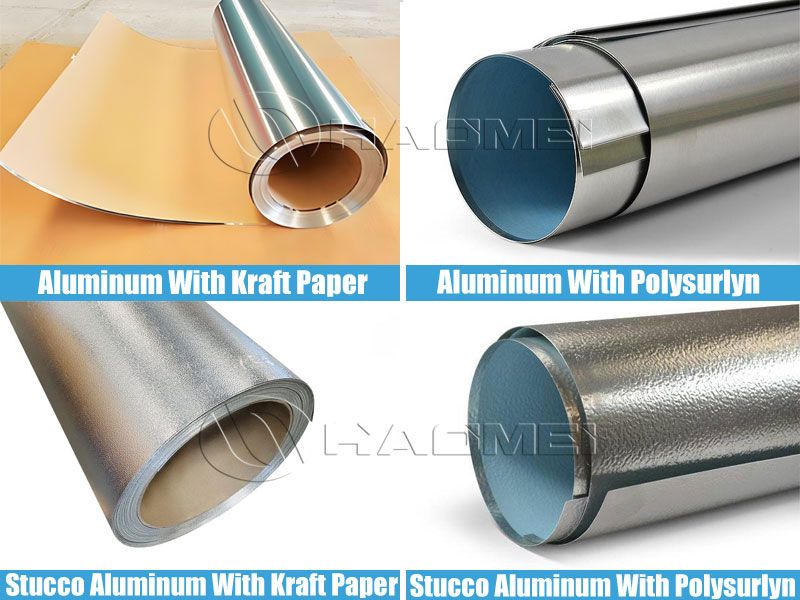
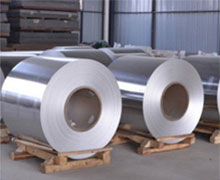
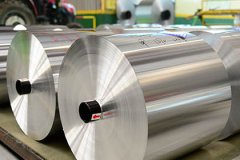
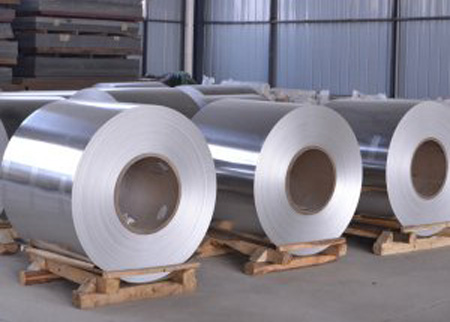
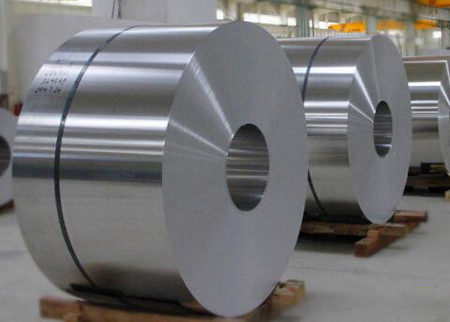
Moisture-barrier aluminum coils are integrated protective products formed by laminating aluminum with specialized moisture-proof vapor barrier materials using a lamination process. They are widely used for insulation cladding in industrial piping, HVAC ductwork, and refrigeration equipment. In the operation and maintenance of insulation systems, the infiltration of water vapor into the insulation layer—which causes increased thermal conductivity, metal pipe corrosion, and moisture-induced clumping of insulation wool—has long been a challenge for HVAC and refrigeration contractors. To meet diverse operating conditions and budget requirements, Haomei Aluminum offers two moisture-barrier options: kraft paper lamination and polysurlyn film lamination. By integrating structural protection and vapor-tight sealing into a single coil, we provide proven material solutions for a wide range of insulation applications.
The moisture barrier aluminum coil alloy consist of 1060 pure aluminum and 3003 aluminum-manganese alloy, supplied in H14/H18 tempers and compliant with ASTM B209 specifications. The 1060 aluminum coil with moisture barrier features ≥99.6% aluminum purity, a tensile strength of 85–110 MPa, and ≥6% elongation, making it suitable for standard indoor hot/cold water piping and duct insulation. The 3003 aluminum coil with moisture barrier contains 1.0%–1.5% manganese, offers a tensile strength of 110–150 MPa, and provides superior resistance to salt spray and hot-humid corrosion, making it ideal for coastal and chemical processing environments. Coil thicknesses range from 0.2 mm to 1.0 mm (with 0.3 mm and 0.5 mm being common specifications), and standard widths are 1000 mm and 1200 mm. Thickness tolerances are controlled within ±0.02 mm, and material certificates along with mechanical property test reports are provided for every batch.
The kraft paper moisture-barrier solution excels in cost-effectiveness and reliability.
This solution utilizes 80–120 g/m² industrial-grade waterproof impregnated kraft paper as the inner vapor barrier layer. It features a low-density polyethylene (LDPE) coating that fills fiber voids and is thermally bonded to an aluminum base layer at high temperatures. The kraft paper is flexible and adheres well to the insulation surface, minimizing slippage during seam sealing. With its moderate cost, it is currently the most widely used moisture barrier option in pipeline insulation projects. Compared to using an aluminum-only outer jacket, aluminum coil with kraft paper moisture barrier reduces water vapor permeability by over 30%. It boasts an interlayer peel strength of ≥8 N/25mm, ensuring no delamination during long-term use, and is suitable for moderate-humidity environments such as indoor HVAC systems, underground utility tunnels, and standard hot/cold water piping.
The polysurlyn film moisture barrier stands out for its superior vapor barrier performance and weather resistance.
This solution replaces traditional kraft paper with a polysurlyn ionomer resin film (typically 0.05–0.08 mm thick) as the inner vapor barrier. The film is dense and free of fiber voids, reducing water vapor permeability by approximately 40% compared to the kraft paper option and offering enhanced vapor barrier capabilities. Polysurlyn film offers excellent flexibility and puncture resistance; it retains its toughness in low-temperature environments without cracking or becoming brittle, while also resisting oil and chemical corrosion. Aluminum coil with polysurlyn moisture barrier targets applications with stringent vapor barrier requirements, such as cryogenic refrigerant piping, cold chain storage, outdoor piping networks in high-humidity or rainy regions, and cleanrooms. Although the unit cost is higher than that of the kraft paper option, it delivers significant value through superior long-term moisture protection reliability and reduced maintenance needs.
Regardless of the chosen moisture barrier material, the aluminum coil substrate is available in either a smooth or embossed finish: The smooth aluminum coil with moisture barrier offers superior seam tightness and a thermal reflectivity exceeding 85%, while the stucco embossed aluminum coil with moisture barrier provides approximately 25% greater longitudinal rigidity and enhanced resistance to denting and deformation. The material exhibits excellent cutting, bending, and seaming characteristics, making it suitable for various pipe diameters and irregular fittings; its integrated structure eliminates the need for secondary on-site vapor barrier installation, thereby reducing labor steps and the risk of overlapping defects. From a project specification perspective, the kraft paper moisture barrier aluminum coil is the preferred choice for budget-constrained projects with moderate humidity conditions, whereas the polysurlyn film moisture barrier aluminum coil is recommended for cryogenic, high-humidity, or long-service-life applications.
Haomei Aluminum offers customization options for width, coil weight, and moisture barrier type. Prior to shipment, products undergo rigorous testing for peel strength, moisture immersion resistance, and dimensional accuracy. Export packaging utilizes moisture-proof film and sturdy wooden pallets to guarantee the product remains free from oxidation and delamination after long-distance ocean transport. The moisture barrier aluminum coils have been widely deployed in municipal heating, commercial HVAC, and industrial refrigeration projects across the Middle East, Southeast Asia, and South America. Material certification documents can be provided in accordance with project standards; please contact us to request detailed specifications and price quotes for both moisture barrier options.
live:onlinehcx



 Haomei Aluminum
 live:onlinehcx
 +8637165621391