




Aluminum sheet, coil and foil of Haomei Al. are widely used in automotive, transportation, printing, construction, packa...more >>


Haomei Al. is a large-scale listed company of aluminum sheet, aluminum coil and aluminum foil manufacturing, and the ann...more >>
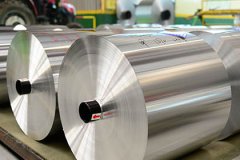
Aluminum jacketing rolls that meet the ASTM C1729 standard—often referred to as aluminum insulation cladding or simply "aluminum jacketing"—are primarily used to provide an external protective layer for insulation systems on industrial piping, storage tanks, towers, valves, elbows and HVAC equipment. It’s function is to to cover insulation materials such as glass wool, mineral wool or aluminum silicate, shielding the insulation system from rain, moisture, UV radiation, mechanical impact and environmental pollutants.
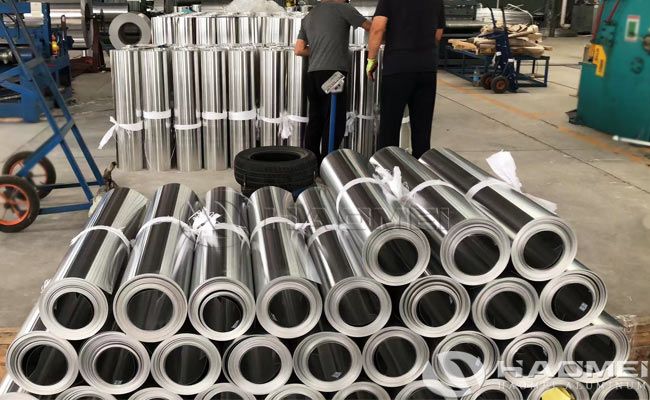
ASTM C1729 is a widely recognized specification in the North American market for aluminum protective jacketing, covering flat, embossed, or corrugated aluminum cladding sheets. When procuring these materials, in addition to ensuring compliance with ASTM C1729, it is essential to verify specific requirements—such as alloy type, thickness, and moisture barrier specifications—based on project blueprints, end-user standards, and the installation environment.
With a density of approximately 2.70 g/cm³, aluminum is lightweight, making it an ideal choice for large-scale insulation projects involving extensive piping and equipment. Aluminum naturally forms an oxide layer on its surface, providing excellent corrosion resistance in typical atmospheric conditions. Furthermore, embossing the surface increases its rigidity and helps mask minor scratches or surface irregularities that may occur during transport and installation.
Aluminum jacketing rolls can be easily fabricated—through processes such as shearing, ribbing, rolling, seaming, and riveting—allowing for efficient on-site application over pipes, elbows and tanks of various diameters. Common applications include petrochemical, power generation, LNG, pharmaceuticals, food processing, pulp and paper mills, commercial HVAC, and general industrial equipment.
Aluminum rolls used for insulation jacketing (per ASTM C1729) typically consist of alloys such as 3003, 3105, or 5005; the specific alloy should be confirmed based on project technical specifications. Alloy 3003 is widely used due to its excellent formability and resistance to atmospheric corrosion, while 3105 is also frequently employed for insulation jacketing and architectural coil applications.
Common tempers include H14 and H16, which provide a balance between formability during fabrication and structural rigidity after installation. For applications requiring complex rolling, ribbing/corrugation, or cladding of small-diameter components, the temper should be selected in coordination with the fabrication equipment and installation methods.
Common thicknesses include:
0.25 mm (0.010 in)
0.40 mm (0.016 in)
0.50 mm (0.020 in)
0.60 mm (0.024 in)
The actual thickness should be determined based on equipment dimensions, insulation thickness, wind loads, required mechanical protection, and project specifications. For large storage tanks, outdoor equipment, or areas prone to physical impact, it is often necessary to evaluate the feasibility of using greater thicknesses or reinforced structural designs.
In piping and equipment insulation, the ingress of moisture into the insulation layer can lead to Corrosion Under Insulation (CUI). Aluminum jacketing with Polysurlyn Moisture Barrier (PSMB)—a multi-layer polymer film laminated to the inner surface of the aluminum—helps reduce the migration of moisture, chloride ions, and other agents toward the metal surface of the equipment.
Projects in oil refining, coastal regions, humid industrial zones, cryogenic systems, or areas subject to frequent wash-downs often require aluminum jacketing with Polysurlyn moisture barrier. It should be noted that while such a barrier enhances the moisture resistance of an insulation system, it cannot serve as a substitute for proper sealing, overlapping, drainage, professional installation, and ongoing maintenance.
When procuring aluminum rolls for insulation jacketing (per ASTM C1729), it is recommended to specify the following:
Alloy grade, temper, and base metal thickness;
Surface finish: plain, stucco-embossed, or corrugated;
Requirement for a Polysurlyn moisture barrier;
Coil width, inner core diameter, outer diameter, and weight per coil;
Acceptance criteria regarding surface scratches, oil residue, indentations, and edge burrs;
Documentation for ASTM C1729 compliance, including a Material Test Certificate (MTC) detailing chemical composition and mechanical properties;
Export-standard moisture-proof packaging, wooden pallet requirements, and container loading specifications.
Haomei Aluminum offers aluminum rolls—such as 3003, 3105 and 5005 alloys—designed for industrial insulation jacketing systems. These are available in plain or stucco-embossed finishes, with the option of an integrated Polysurlyn moisture barrier. We can assist in defining specifications based on ASTM C1729 standards, project-specific dimensions, and installation requirements.
live:onlinehcx





 Haomei Aluminum
 live:onlinehcx
 +8637165621391
